Good news for anyone who has ever stood at airport security watching their SPF get confiscated: yes, you can take sunscreen on a plane. The rules are straightforward once you know them and with a little planning, your sun care routine does not have to take a hit just because you are 35,000 feet in the air.
The Short Answer
Sunscreen in any format — cream, lotion, gel, or spray — is permitted.
as long as each container is 100ml (3.4oz) or less and fits inside a single clear, resealable liquids bag.
Full-size bottles are fine in checked luggage. Solid sunscreen sticks are not classified as liquids and are not subject to size restrictions in carry-on bags. Spray sunscreen follows the same liquid rules as everything else, covered in more detail below.
TSA Rules for Sunscreen in the USA
In the US, sunscreen is governed by the TSA’s 3-1-1 rule. Here is what that means in practice:
- Each liquid container must be 3.4oz (100ml) or less. This applies to creams, lotions, gels and aerosol sprays. The rule applies to the size of the container, not the amount of product inside it. A 200ml bottle that is almost empty will still be confiscated at security. Always check the label before packing.
- All liquids must fit in one clear, quart-sized resealable bag approximately 6″ × 9″ or 7″ × 8. One bag per passenger. Everything in your liquids allowance, from SPF to shampoo to moisturizer, so plan ahead.
- In checked luggage, full-size sunscreen bottles are permitted. For aerosol sprays, FAA regulations allow toiletry aerosols for personal use in checked bags, but each container must not exceed 500ml (17 fl oz), and the total quantity of aerosols per passenger must not exceed 2 litres or 2kg in aggregate. Caps must be secured to prevent accidental discharge during the flight.
- Solid sunscreen sticks are exempt from the 3-1-1 rule. They are classified as solids, not liquids, and can travel in carry-on without counting toward your liquids allowance.
Source: TSA, 2023
Sunscreen Rules for UK and European Flights
The UK rule mirrors the TSA standard: 100ml per container, with all liquids placed in a single transparent resealable plastic bag of no more than one litre total capacity. One bag per passenger applies here too.
It is worth noting that some UK airports like Heathrow and Edinburgh with updated CT security scanners have begun allowing larger liquids through. However, this is not universal across all airports and terminals, and the 100ml limit remains the standard rule.
Unless you have confirmed in advance that your specific departure airport operates updated scanning, treat 100ml as the limit. Turning up with a 250ml bottle and hoping for the best is not a strategy worth gambling on.
Airports across the EU follow broadly the same 100ml framework. Rules can vary slightly by airline and route, so for international travel it is always worth checking official guidance from your airline and departure airport before you pack.
Source: Gov.uk., 2026
Can You Take Spray Sunscreen on a Plane?
Yes, and this is one of the questions that causes the most confusion at security. Spray sunscreen is treated as a liquid, which means the same 100ml carry-on rule applies regardless of whether the bottle is a traditional aerosol or a compressed air formula.
In carry-on: Spray sunscreen of 100ml or under can travel in your liquids bag. Anything larger stays in your checked luggage.
In checked luggage: Aerosol spray sunscreens are permitted. They must be for personal use and caps must be secured. Some airlines place restrictions on the total quantity of aerosol products per passenger, so if you are travelling with multiple spray bottles it is worth checking your airline’s specific policy.
Practical tip: If your spray sunscreen comes in a size larger than 100ml, do not decant it into another bottle before flying. Decanting can compromise the formula, and unlabelled bottles can cause issues at security. Either buy a travel-sized version or transfer your full-size bottle to checked luggage and pick up a smaller option for your carry-on.

Packing Tips to Make the Most of Your Liquids Allowance
A little planning makes the difference between a stress-free security experience and leaving your favourite formula behind.
- Buy travel-sized versions where possible. Travel sizes are designed for the format and keep the formula intact.
- Pack full-size sunscreen in your checked luggage and use a travel-size for the flight and the first day. Restock from your checked bag on arrival.
- Secure all lids tightly. Cabin pressure changes during flight can cause containers to leak. Placing bottles in a sealed bag inside your liquids bag adds an extra layer of protection.
- Remember the total bag limit. In the UK and EU, the total volume of all liquids in your carry-on cannot exceed one litre. In the US, everything needs to fit in one quart-sized bag. Plan your liquids before you leave, not at the security tray.
If you are not already applying SPF as part of your daily routine, here is how to fit sunscreen into your skincare.
Does UV Exposure Increase on a Plane?
At cruising altitude, typically around 35,000 feet, the atmosphere is considerably thinner than at ground level. Thinner atmosphere means less natural filtration of UV radiation, which means meaningfully higher UV exposure than you would receive on the ground.
Research published in JAMA Dermatology found that pilots flying for just under an hour at 30,000 feet receive the same UVA exposure as a 20 minute tanning bed session.
Most aircraft windows do not block UVA rays, meaning passengers seated next to windows on daytime flights are receiving constant UV exposure throughout the journey.
It is the same as sitting next to a sunny office window or driving with the sun on your face. Find out why you need sunscreen indoors too.
Applying SPF to your face, neck, and hands before boarding is a simple habit that takes seconds and is genuinely backed by the evidence.
It also means your SPF is already working before your flight. Read more about when UV rays are at their strongest and why protection year-round matters.
Travelling to Hawaii? Your Sunscreen Needs to Comply
If Hawaii is on your itinerary, there is one more consideration beyond the packing rules.
Hawaii has legislation banning sunscreens containing certain chemical filters, specifically oxybenzone and octinoxate, due to their impact on coral reef ecosystems.
PoolBar’s mineral sunscreen range is Hawaii Act 104 compliant, meaning customs will not confiscate your SPF at the border. It is one less thing to think about when you are already navigating liquids, bags and boarding passes.
Read more about what sunscreen you can take to Hawaii and why it matters.

Which PoolBar London Products Work for Travel?
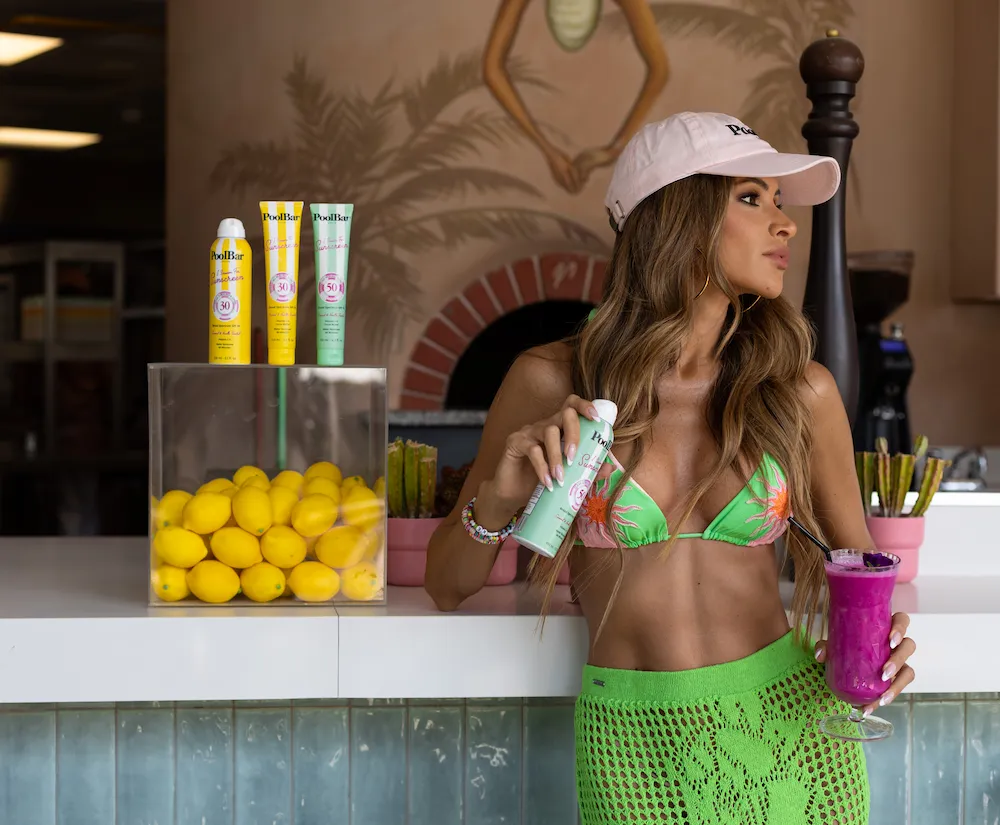
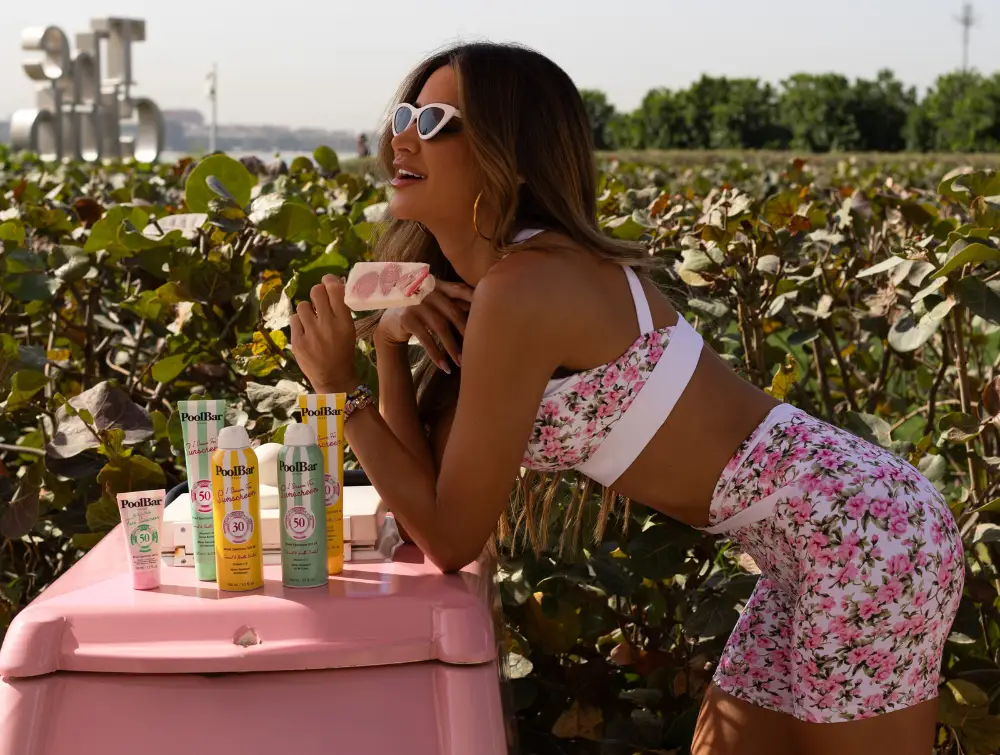
PoolBar’s SPF face, body creams and clear sprays are all formulated and manufactured in the USA, dermatologically tested for all skin types, and reef safe.
Before packing, check the label for the exact volume. Products over 100ml travel in checked luggage without restriction. For carry-on, a smaller travel bottle works well as long as it is sealed tightly and within your liquids allowance.
For the flight itself, the Mineral SPF 50 Face Cream is TSA compliant; a natural choice for your carry-on and applying whilst on the plane.
Sun Care Infused With Skincare
PoolBar London sunscreens are formulated and manufactured in the USA, dermatologically tested, reef safe, and Hawaii Act 104 compliant – built around Zinc Oxide as the active ingredient for UVA/UVB protection, with antioxidant free radical support from Vitamins C and E.