For anyone who wants a faster way to apply SPF, spray sunscreen is a straightforward choice.
It covers larger body areas quickly, reaches awkward spots with ease, and makes reapplication during the day considerably more convenient than cream.
The catch is that it only works when it is applied correctly. The two most common mistakes are not applying enough and not rubbing it in afterwards.
This guide covers everything you need to know to get full protection from every application.
Before You Spray: What to Know First
A few things worth checking before the first application of the day.
Check the label. Before anything else, confirm your spray sunscreen offers broad-spectrum protection against both UVA and UVB rays and carries an SPF appropriate for your level of sun exposure.
The format of the sunscreen matters far less than what it contains and what it actually protects against. For a full breakdown of what SPF numbers mean, our guide covers the detail.
Shake the can. Shake vigorously for five to ten seconds before use. The ingredients in spray sunscreen can separate between uses, and shaking ensures an even distribution of the formula before it reaches your skin.
Apply 15 minutes before sun exposure. Chemical sunscreen actives such as Avobenzone and Octisalate work by absorbing UV radiation and converting it into heat through a chemical reaction in the skin.
That reaction takes around 15 to 20 minutes to activate after application, which is why applying before going outside rather than on arrival matters. For more on how UVA and UVB rays affect the skin, our dedicated guide covers everything.
Apply to dry skin in the open air. Applying to dry skin allows for the most effective absorption. Always apply spray sunscreen outside or in a well-ventilated space. Never apply in an enclosed room or car.
Step by Step on How to Apply Spray Sunscreen
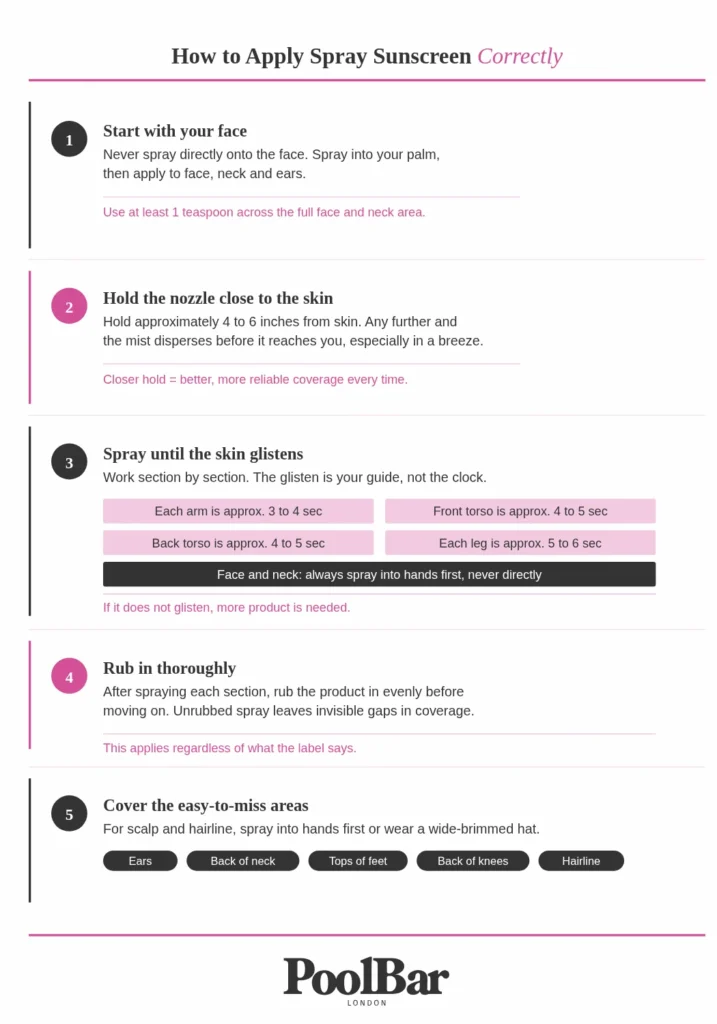
1. Start With Your Face
Never spray sunscreen directly onto your face. Spray a generous amount into the palm of your hand and apply from there to the face, neck, and ears.
This keeps product away from the eyes, nose, and mouth, and gives you more control over even coverage than a direct spray would. Use at least one teaspoon across the full face and neck area.
For more on building SPF into your daily face routine, our skincare routine guide covers each step.
2. Hold the Nozzle Close to the Skin
Hold the nozzle approximately four to six inches from the skin. Holding it further away causes the mist to disperse before it reaches the skin, particularly in any breeze. Staying closer gives you better, more reliable coverage with each pass.
3. Spray Each Section Until the Skin Glistens
Work section by section across the body. Spray each area until the skin looks visibly wet and glistening. If it does not glisten, more product is needed.
Most adults will need approximately:
- Face and neck: Spray into hands first, then apply. Never spray directly onto the face.
- Each arm: Approximately three to four seconds.
- Front torso: Approximately four to five seconds.
- Back torso: Approximately four to five seconds.
- Each leg: Approximately five to six seconds.
These are general guides rather than fixed rules to follow. The glistening on the skin is the most reliable indicator regardless of timing, as this can vary between products.
4. Rub In Thoroughly
After spraying each section, rub the product in evenly before moving on to the next area.
The Skin Cancer Foundation confirms that spray sunscreen should be rubbed in thoroughly after application to ensure the UV-filtering ingredients are distributed consistently across the skin.
Spray that has not been rubbed in can leave gaps in coverage that are invisible to the eye but leave skin unprotected. This applies regardless of what the label says.
Source: Skin Cancer Foundation, 2025.
5. Cover the Easy-to-Miss Areas
The ears, back of the neck, tops of the feet, back of the knees, and the hairline are consistently the most overlooked areas during spray application.
For the scalp and hairline, spray into the hands first and apply from there, or wear a wide-brimmed hat for additional coverage on those areas.
Here’s an easy infographic to follow:
How Much Spray Sunscreen Do You Need?
SPF testing is conducted at a standard application rate of two milligrams of product per square centimetre of skin.
Research published by the Canadian Dermatology Association found that in real-world conditions, people apply roughly 20 to 50% of the recommended amount.
Source: Canadian Dermatology Association, 2020.
The American Academy of Dermatology recommends approximately one ounce of sunscreen, roughly the amount to fill a shot glass, to cover all exposed skin on the body.
A standard six ounce bottle of spray sunscreen contains approximately six full body applications. If a bottle is lasting considerably longer than that, it is a reliable sign that not enough product is being applied per use.
Source: American Academy of Dermatology, 2025
When and How Often to Reapply Spray Sunscreen
Reapply every two hours during sun exposure, regardless of SPF level. No sunscreen, spray or lotion maintains its protection indefinitely.
Reapply immediately after swimming, towel drying, or heavy sweating.
Water resistance ratings of 40 or 80 minutes refer specifically to the duration of water resistance during activity, not the full protection window.
Once that window closes, reapplication is required. For a full explanation of what water resistance ratings actually mean, our guide on waterproof vs water resistant sunscreen covers it.
The same quantity rules apply on reapplication as on first application. Spray until the skin glistens, then rub in.
For reapplication over makeup, spray into the hands first and pat gently onto the skin rather than rubbing, to avoid disturbing the base underneath.
Spray Sunscreen Safety Guidelines
Always apply in the open air. Never apply spray sunscreen in an enclosed space such as a car or indoor room. Applying outdoors or in a well-ventilated space reduces the risk of inhaling aerosolised particles during application.
Be aware of flammability. Traditional aerosol sprays contain pressurised chemical propellants which are flammable.
As a general rule, keep all spray sunscreen away from open flames until the product has been fully applied and rubbed into the skin.
Non-aerosol sprays that use compressed air rather than chemical propellants carry a lower flammability risk, but the same precaution applies near any open flame.
Account for wind. In breezy conditions, the mist from a spray can disperse before reaching the skin.
Shield the spray with your free hand as you apply, or switch to a lotion in particularly windy weather for more reliable coverage.
For more on when and why sun protection matters throughout the day, our blog on when UV rays are strongest is worth a read.
Common Spray Sunscreen Mistakes & How to Avoid Them
A quick reference for the errors that most often lead to inadequate protection:
- Not shaking the can before use.
- Holding the nozzle too far from the skin.
- Spraying and walking away without rubbing in.
- Applying too little and not checking for glistening skin.
- Spraying directly onto the face rather than into the hands first.
- Skipping reapplication after swimming or sweating.
- Applying in windy conditions without shielding the spray.
- Storing the can in a hot car or in direct sunlight, which degrades the formula over time.
Our guide on sunscreen expiry covers exactly what happens to a formula when it is stored incorrectly and why it matters for your protection.
Not Sure Whether Spray or Lotion Is Right for You?
Both formats offer effective sun protection when applied correctly. The right choice often comes down to your routine, your skin type, and the situation you are applying in. Our complete guide to spray vs lotion sunscreen covers the comparison in full, including when each format works best.
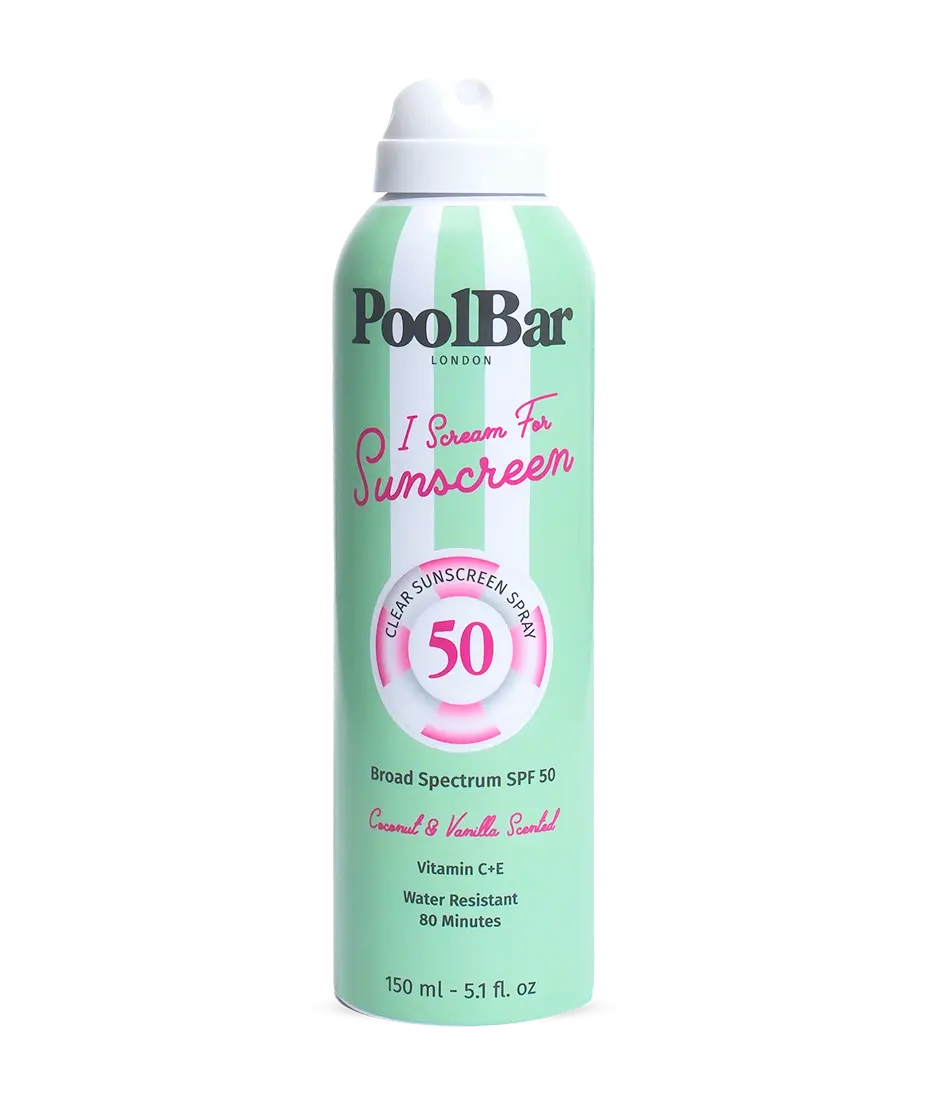
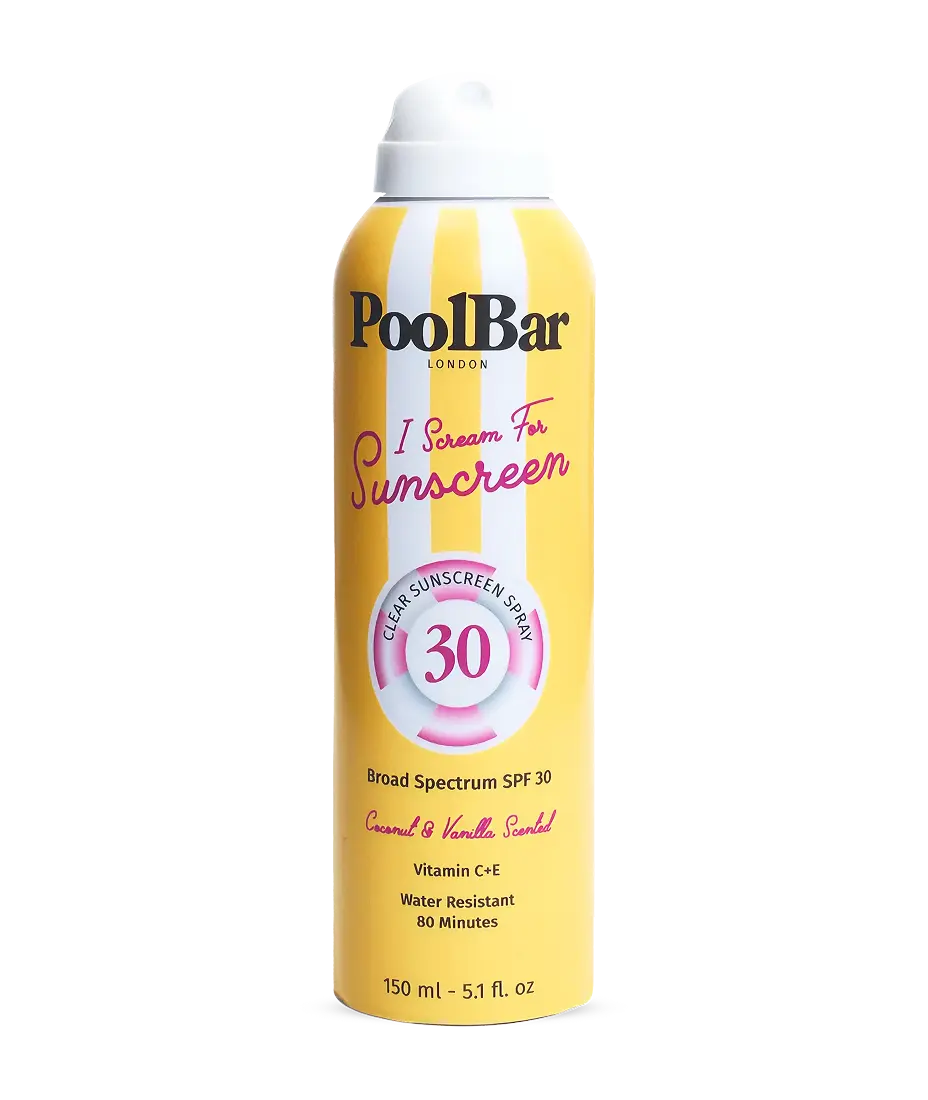
PoolBar's SPF 30 and SPF 50 Clear Sprays
Sun Care Infused With Skincare
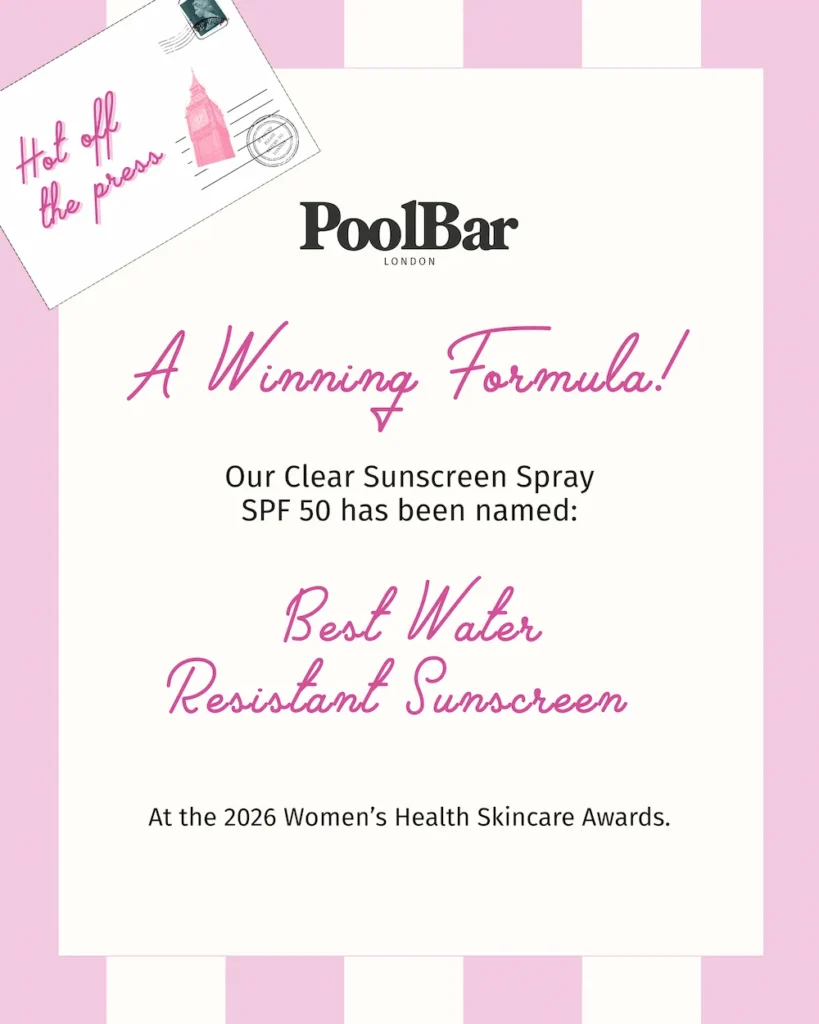
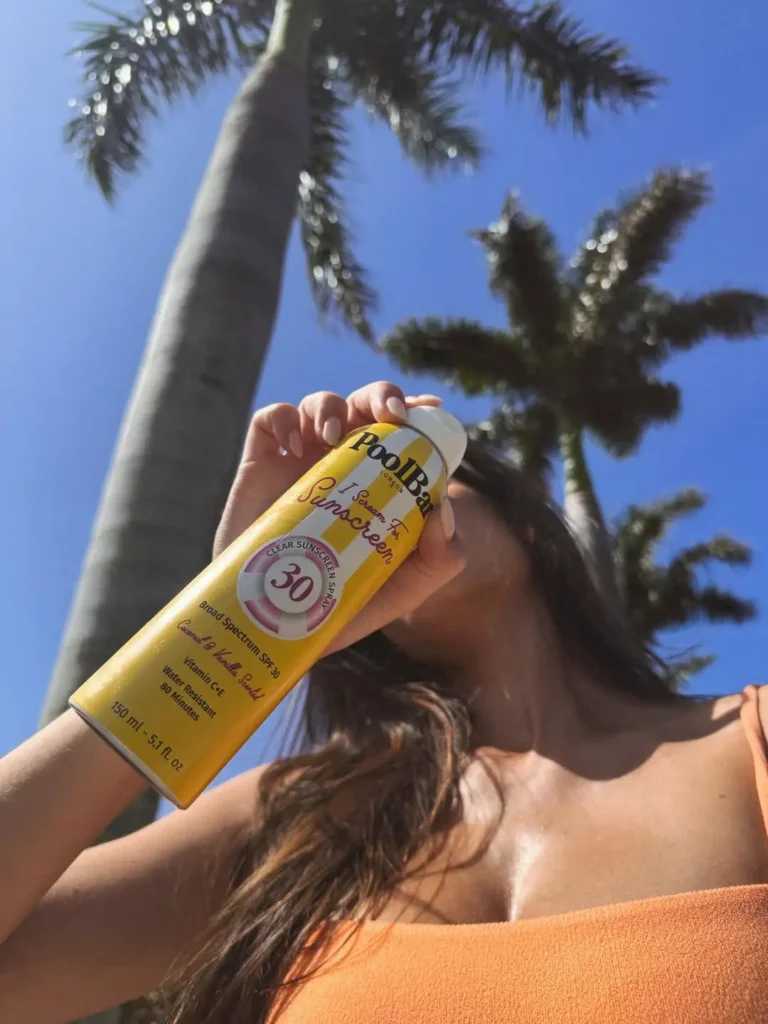
PoolBar London sunscreens are formulated and manufactured in the USA, dermatologically tested, reef safe, and Hawaii Act 104 compliant. Broad spectrum for UVA/UVB protection, with antioxidant free radical support from Vitamins C and E.