Yes, you can wear sunscreen over makeup. And if you are heading outside, you should be reapplying every two hours whether you are wearing makeup or not. This guide covers how to apply SPF correctly before makeup goes on, and the most practical methods for reapplying over it throughout the day.
Does Sunscreen Go Under or Over Makeup?
Sunscreen goes on first. It should be the last step of your skincare routine, applied before primer, foundation, or any other base product, as covered in When To Apply Sunscreen In Your Skincare Routine.
Applying it first ensures the active ingredients are distributed evenly across the skin before any other products are layered on top.
When it comes to choosing your morning SPF, SPF 30 filters around 97 percent of UVB rays while SPF 50 filters around 98 percent.
That one percent difference may sound small but it adds up over a full day of exposure, which is why SPF 50 is generally considered the highest protection for the face. For more on what SPF numbers mean and how to choose the right level, our guide covers the details.
What Type of Sunscreen Should You Apply Under Makeup?
Not all sunscreens activate at the same speed, which is worth knowing before applying your base. Chemical sunscreens, which use UV filters such as Avobenzone and Octisalate, require around 15 to 20 minutes to become effective after application.
Mineral sunscreens, which use Zinc Oxide, Titanium Dioxide, or a combination of both, provide protection immediately on application.
That also applies to reapplication, meaning a mineral formula applied over makeup throughout the day starts working straight away without any waiting period.
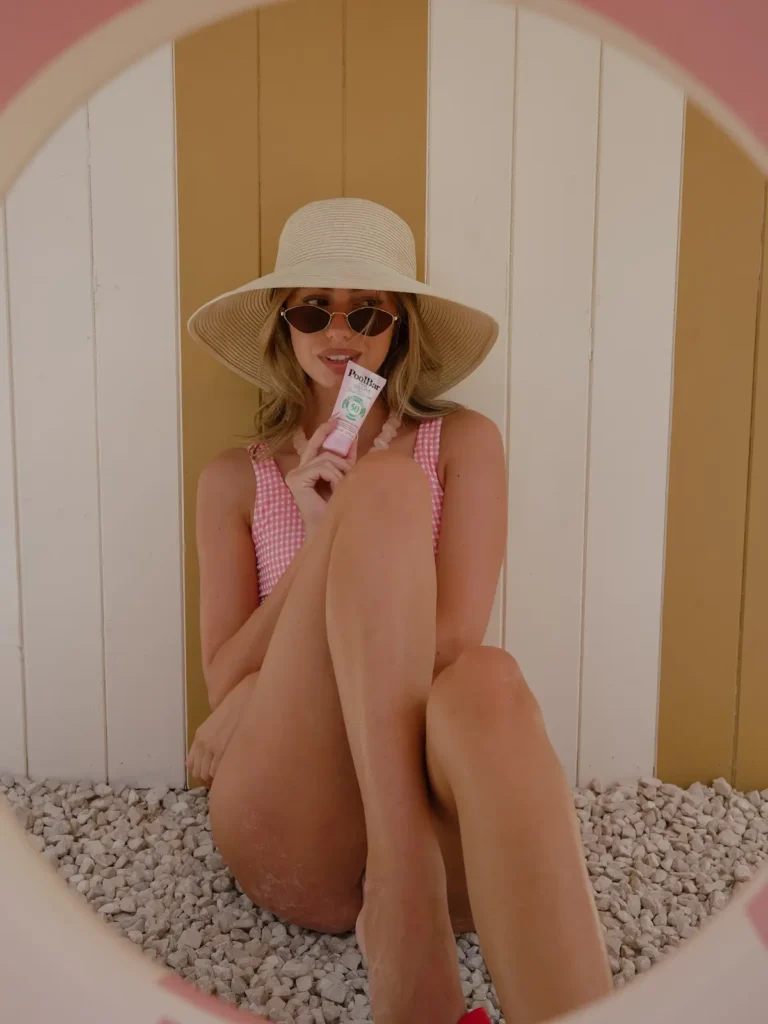
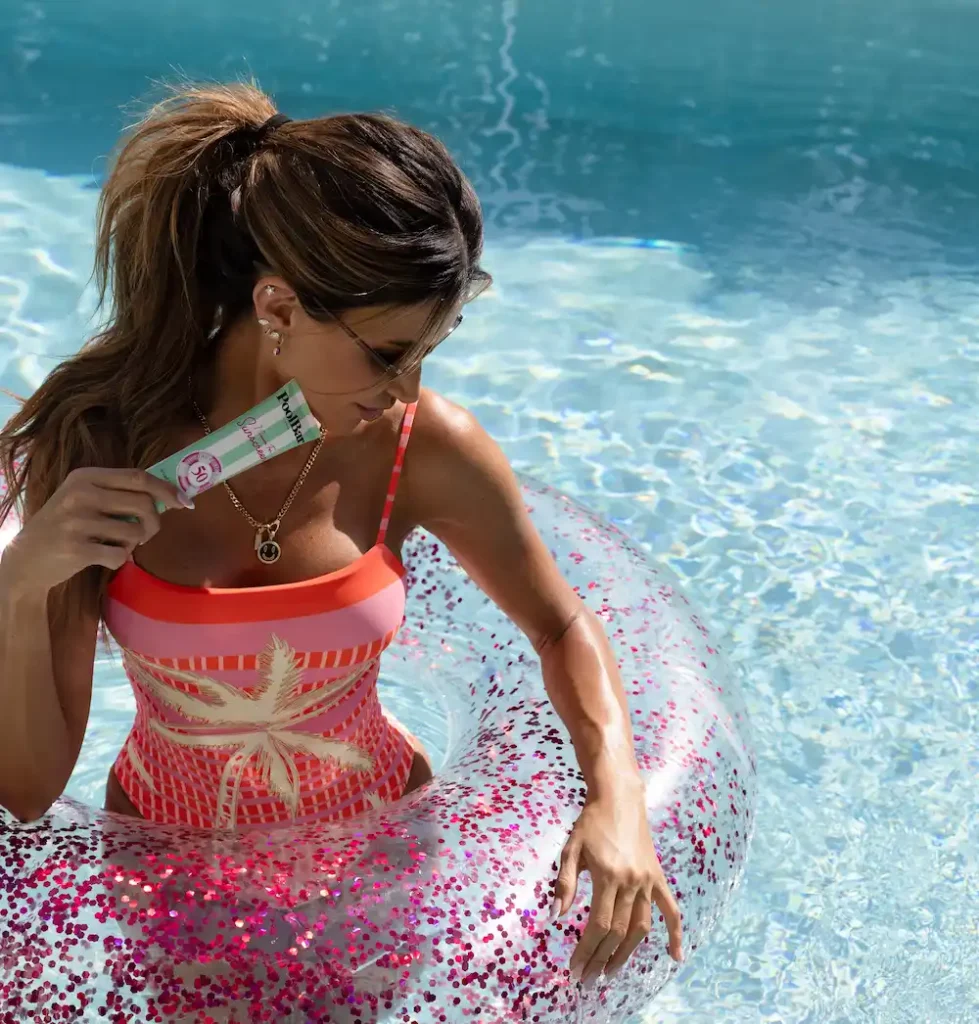
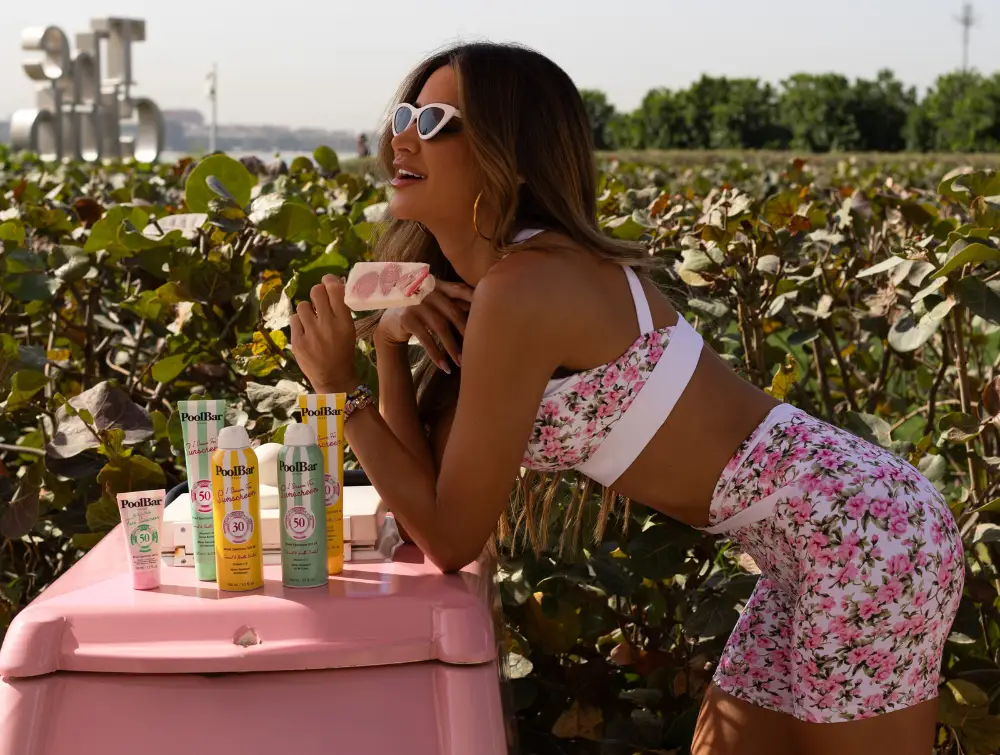
For those looking for a mineral option, PoolBar’s SPF 50 Face Cream is dermatologically tested for all skin types and provides broad-spectrum protection. Learn more about chemical vs mineral sunscreen in our blog.
Why Reapplication Matters Even Over Makeup
Board-certified dermatologist Dr Blair Murphy-Rose confirms that reapplication is essential regardless of SPF or UV filter type, as sunscreen can degrade, wear off, or be removed by water, sweat, or towel drying over time. To maintain full protection, reapplication every two hours is recommended, and immediately after swimming or heavy sweating.
Source: National Library of Medicine, 2019
For more on how UVA and UVB rays affect the skin and why consistent protection matters, our dedicated guide covers the science.
Here’s a quick checklist guide to follow for reapplying sunscreen throughout the day.
Reapplication Checklist
Two hours have passed
Reapply SPF regardless of conditions
You have been swimming
Reapply after getting out of the water and before the water resistance window on the label runs out
You have been sweating heavily
Reapply immediately
You have towelled off
Towel drying removes product even if you reapplied recently
You have touched your face repeatedly
Coverage in those areas may be patchy
It is overcast
UV rays penetrate cloud cover, the two hour rule still applies
You have moved from shade to direct sun
Reapply before prolonged direct exposure
For a full guide to protecting your skin from sun damage, How to Prevent Sunburn covers everything you need to know.
Does Makeup with SPF Count as Sun Protection?
There are some foundations, tinted moisturizers, and setting products that carry an SPF rating. This provides some additional UV filtering but it does not constitute adequate sun protection on its own.
The reason comes down to quantity. SPF testing is conducted at two milligrams of product per square centimetre of skin. To put that into context, that is around one teaspoon of product for the face and neck alone.
Most people apply a fraction of that amount, particularly when wearing makeup, which is why the level of protection stated on the label is rarely what the skin actually receives.
A 2021 peer-reviewed study published in the Journal of Skin Research and Technology found that the SPF of makeup products were dramatically lower than stated on the label when applied at the typical amount used by consumers, which is lower than the recommended quantity.
Source: Skin Research and Technology, 2021
A sunscreen applied correctly in the morning, followed by reapplication throughout the day, remains the most recommended and reliable approach. Makeup with SPF is a useful addition but not a substitute.
How to Reapply Sunscreen Over Makeup
There is no method that is entirely without compromise. Each approach below has genuine advantages and honest limitations. Knowing both helps you choose what works for your routine and your skin type.
Method 1: Sunscreen Spray
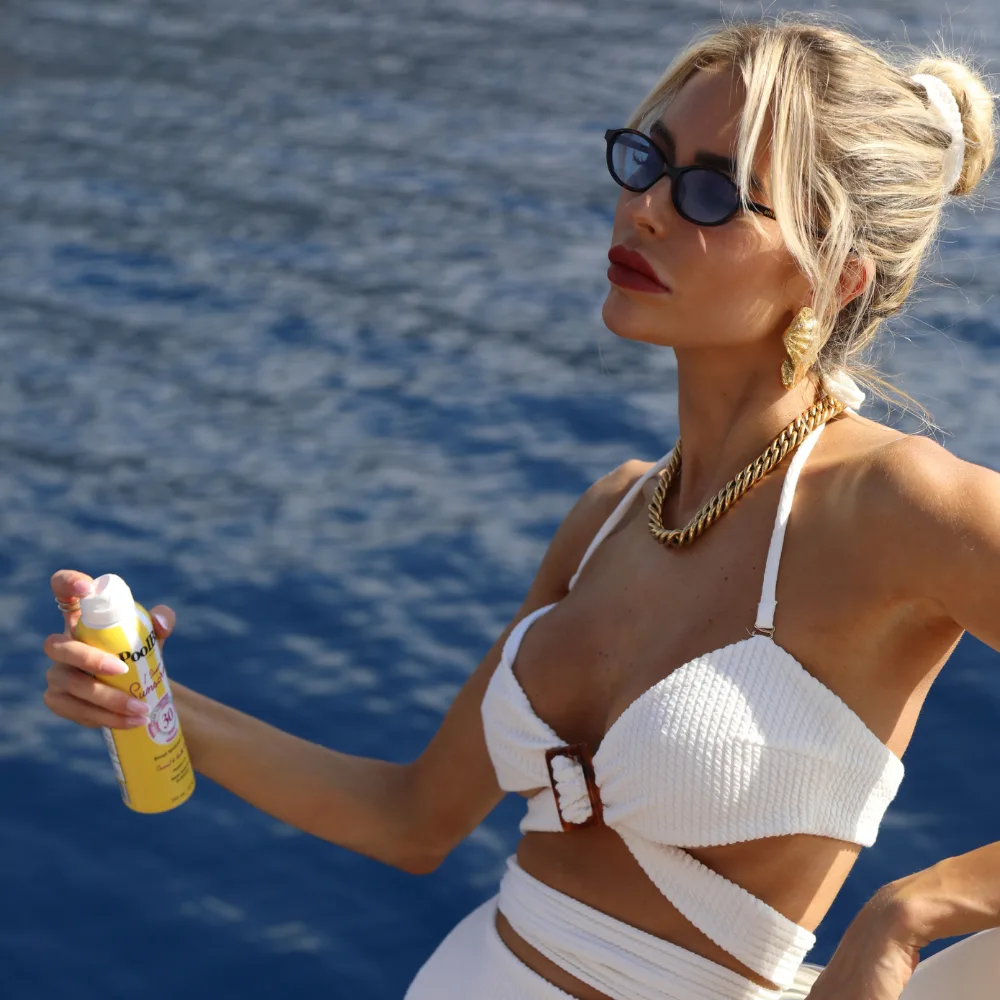
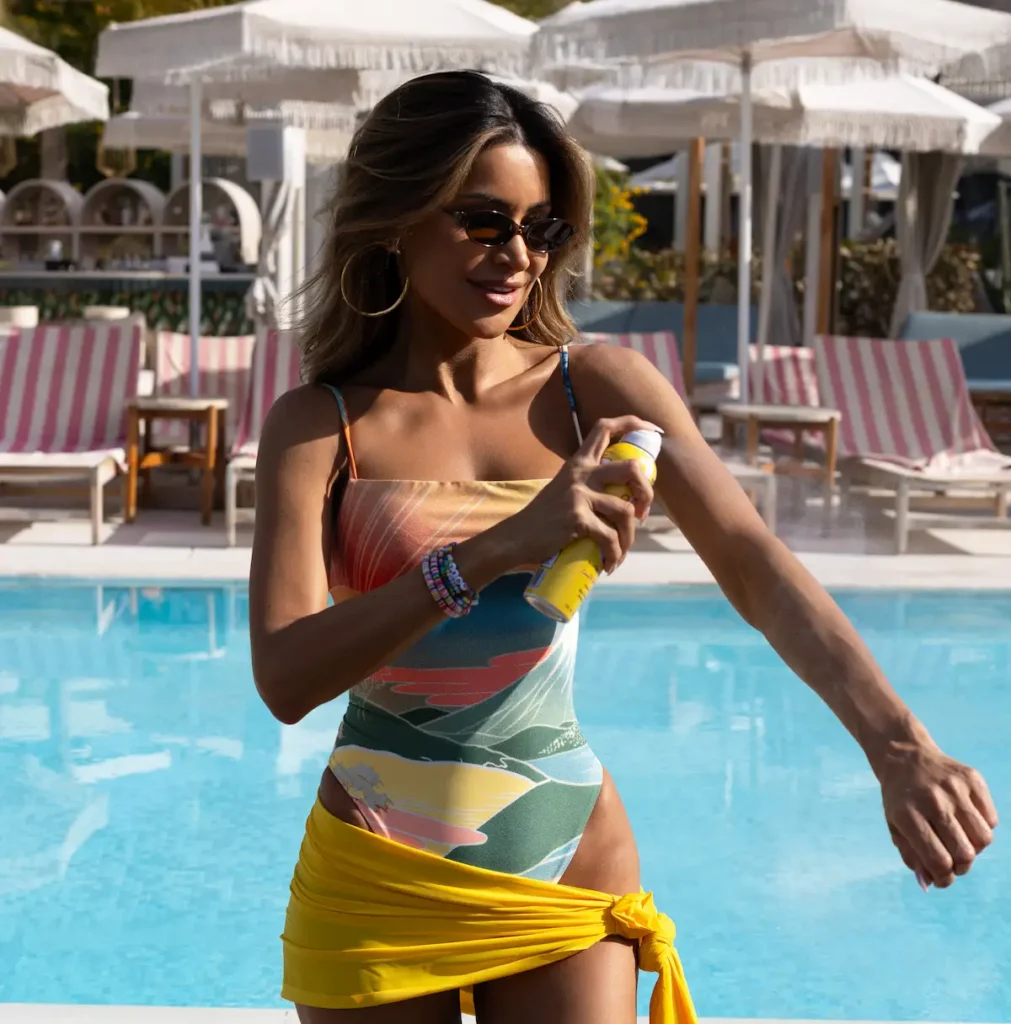
The fastest and least disruptive option for most makeup wearers. For the face, spray into your hands first and press and pat gently onto the skin rather than spraying directly.
This avoids product reaching the eyes, nose, and mouth and gives you more control over even coverage. Use a generous amount, as one quick spray across the face is not sufficient for meaningful protection.
Apply in layers if needed and always apply in a well-ventilated area. For a full guide to spray sunscreen application technique, read more here.
Method 2: Sunscreen Applied with a Damp Sponge
This method is suited to any lotion or cream sunscreen formula, whether that is a dedicated facial SPF, a mineral cream, or any other non-spray format.
Dispense a generous amount onto the back of your hand and apply using a damp makeup sponge with a pressing and patting motion rather than dragging.
This technique deposits the sunscreen evenly without lifting the base underneath. A lighter liquid formula tends to blend most seamlessly, but a cream sunscreen applied with a light hand works equally well. The key is the pressing motion rather than the consistency of the product.
Once applied, allow the sunscreen to set fully before baking with a translucent powder, in the same way you would set foundation.
This helps the formula settle into the skin, minimizes any disruption to the makeup layer, and leaves a more natural finish.
Some touch-up to blush or bronzer may be needed afterwards. This method takes more time than a spray but gives more control over coverage.
Method 3: Mineral Powder SPF
A dry mineral powder sunscreen applied with a brush. The dry format applies without shifting the base underneath and suits oily skin well as it absorbs shine at the same time.
For best results, apply using two to three circular brush strokes starting from the centre of the face and working outward, paying close attention to commonly missed areas such as the nose, hairline, ears, and jawline. Because the powder acts as a setting layer itself, no additional translucent powder is needed afterwards.
The Skin Cancer Foundation notes that powder sunscreens can be useful for layering over makeup and for convenient touch-ups throughout the day but should not be relied upon as the sole form of protection for extended sun exposure.
It works best as an additional layer alongside a spray or sponge reapplication rather than as your only method.
Source: Skin Cancer Foundation, 2025
One format to avoid over makeup: sunscreen sticks. The swiping motion drags and pills foundation, making them unsuitable for application over a base.
Sunscreen Reapplication Over Makeup Comparison
To help you choose the right approach for your routine, here is how the three methods compare.
*Swipe left to view the full table on mobile
| Spray | Damp Sponge | Mineral Powder | |
|---|---|---|---|
| Best for | Quick reapplication throughout the day, particularly over larger areas | Full facial reapplication with maximum coverage control | Light touch-ups and oily skin types |
| Skin type | Oily and combination skin | All skin types | Oily and acne-prone skin |
| Application technique | Spray into hands first, press and pat onto skin. Never spray directly onto the face | Dispense lotion or cream SPF onto the back of your hand, apply with a damp sponge using a pressing and patting motion | Apply with a brush in circular strokes from the centre of the face outward |
| Disrupts makeup? | Minimal when patted rather than rubbed | Minimal with correct pressing technique | Very low, dry format does not disturb the base |
| Coverage | Good when applied generously in layers | Good, gives the most control of the three methods | More difficult to achieve full coverage in sufficient quantities |
| Suitable as sole protection? | Yes, when enough product is applied | Yes, when enough product is applied | Best used as an additional layer alongside spray or lotion rather than as a standalone method |
| Time needed | Fast | Moderate, allow product to set before baking with powder | Fast |
Other Ways to Protect Your Skin and Makeup Outdoors
SPF reapplication is the most reliable method of ongoing sun protection, but it is not the only tool available. On days when you are spending extended time outdoors, a wide-brimmed hat provides direct shade for the face without any interaction with your makeup at all.
It is one of the most practical ways to reduce UV exposure to the face during peak hours while keeping your look intact.
Seeking shade during the hours when UV rays are at their strongest also significantly reduces your cumulative UV exposure. For more on when that window falls throughout the day, our guide on when UV rays are strongest is worth knowing.
For covered body areas, UV-protective clothing removes the reapplication challenge entirely for those areas.
These are not replacements for sunscreen but practical additions to a complete approach to sun protection.
Tips for Making Reapplication Easier
The most common reason people skip reapplication is not that they do not know they should. It is that it feels like too much effort when a full face of makeup is involved. These small adjustments make it considerably more manageable.
- Apply a lighter base on days you expect prolonged sun exposure. Less coverage is easier to reapply over and leaves skin better protected overall.
- Blot before reapplying. A single sheet of blotting paper removes surface oil that can cause SPF products to pill or slip over makeup.
- Set a reminder. The two hour window passes faster than most people expect, particularly when you are busy or distracted.
- Keep a travel-sized SPF in your bag. Having it to hand removes the main barrier to reapplication.
- Reapply regardless of cloud cover. UV rays penetrate cloud cover and the two hour rule applies on overcast days as much as it does in direct sun.
Frequently Asked Questions
Can you wear sunscreen over makeup?
Yes. Applying sunscreen over makeup is entirely possible and dermatologists recommend reapplying every two hours during outdoor exposure regardless of what you are wearing. The key is choosing a format that suits your skin type and applying with a pressing rather than rubbing technique to avoid disturbing your base.
Does sunscreen go under or over makeup?
Sunscreen goes under makeup, as the final step of your skincare routine before any base products. Reapplication goes over makeup throughout the day using a spray, damp sponge, or mineral powder format.
Is SPF in foundation enough?
No. Most people apply far less foundation than the quantity required to achieve the stated SPF. A dedicated sunscreen applied correctly in the morning, followed by reapplication every two hours, remains the only reliable approach. Makeup with SPF provides some additional filtering but should not be relied upon as your primary protection.
What is the best sunscreen to wear under makeup?
The best sunscreen to wear under makeup is one that sits well beneath your base without pilling or disturbing your foundation.
Mineral SPF is a strong choice as protection begins immediately on application, unlike chemical formulas which require around 15 to 20 minutes to become effective.
Sun Protection Whilst Wearing Makeup
Sun protection does not have to stop when your makeup goes on. With the right method and a little practice, reapplication becomes a straightforward part of any routine.
The format you choose matters less than the consistency with which you use it. Reapply every two hours, apply enough product, and your skin stays protected regardless of what you are wearing on your face.
Sun Care Infused With Skincare
PoolBar London sunscreens are formulated and manufactured in the USA, dermatologically tested, reef safe, and Hawaii Act 104 compliant. Broad spectrum for UVA and UVB protection, with antioxidant free radical support from Vitamins C and E.