In This Post
- What Is Happening to Your Skin When It Burns
- What to Expect: The Sunburn Healing Timeline
- The First 24 Hours: What to Do
- How to Stop Sunburn Peeling
- Ingredients That Help Sunburned Skin Recover
- What Not to Use on Sunburned Skin
- When to Seek Medical Advice
- PoolBar’s Sundowner Aftersun Body Lotion
- The Best After-Sun Routine Starts Before You Burn
- Frequently Asked Questions
Sunburn is the skin’s inflammatory response to UV damage, and the steps taken in the first 24 hours make a meaningful difference to how quickly and comfortably it heals. Here is a practical guide to cooling, hydrating, repairing, and managing peeling from the moment you notice the burn.
What Is Happening to Your Skin When It Burns
Sunburn is not just surface redness. It is the visible result of UV radiation damaging the DNA of skin cells, triggering an immune response that causes inflammation, heat, and pain.
UVB rays are the primary cause of sunburn, penetrating the outer layers of skin and initiating that response at a cellular level.
Understanding how UVA and UVB rays affect the skin differently helps explain why protection matters even when you do not burn easily.
The peeling that follows is the body shedding damaged cells as part of the repair process. It cannot be stopped entirely but it can be managed.
And sunburned skin loses moisture at a significantly faster rate than healthy skin, which is why consistent hydration from both the inside and outside is the most important part of recovery.
Source: European Journal of Immunology, 2024
Sunburn Healing Timeline
Knowing what is coming makes the process considerably less stressful.
Hours 1 to 6: Redness and heat develop and intensify as the inflammatory response builds. The full extent of the burn often is not visible until several hours after exposure, which is why sunburn can feel worse the morning after a day in the sun.
Hours 12 to 24: Redness and discomfort typically peak during this window. The skin may feel tight, hot, and tender to the touch. This is when consistent cooling, hydration, and aftersun application matters most.
Days 2 to 3: Redness begins to subside. The skin may start to feel dry and itchy as the outer layers begin to tighten and contract.
Days 3 to 5: Peeling typically begins. This is the body shedding damaged skin cells and is a normal part of the healing process.
Days 7 to 10: Most mild sunburns resolve within this window. The new skin underneath will be more sensitive to UV exposure than normal skin for several weeks after, making it particularly important to stay out of direct sun during peak UV hours.
What to Do in the First 24 Hours
The first 24 hours set the tone for how the skin heals. These are the steps that matter most.
Cool the skin
Take a cool shower or bath, or apply a cool damp cloth to the affected areas for 10 to 15 minutes at a time. Repeat throughout the day to reduce heat and inflammation. Do not use ice or ice packs directly on sunburned skin. Extreme cold on already compromised skin can cause additional damage rather than relief.
Hydrate from the inside
Sunburn draws fluid toward the skin’s surface and away from the rest of the body. Drink more water than usual throughout the day to compensate for that increased fluid loss and support the skin’s repair process from the inside.
Apply aftersun to damp skin
After cooling the skin, apply a generous layer of aftersun lotion to all affected areas while the skin is still slightly damp. Applying to damp skin helps lock in moisture before it evaporates.
Cover all sun-exposed skin, not just the areas that look red, as UV stress affects the skin more broadly than redness alone suggests.
The key ingredients to look for in an aftersun for sunburn are Aloe Vera, for its well-documented anti-inflammatory and soothing properties, and Hyaluronic Acid, to restore the moisture the skin is losing at an accelerated rate.
For a full breakdown of what aftersun is and how its key ingredients work, that guide covers everything you need to know.
Reapply frequently
A single application is not enough. Sunburned skin loses moisture far faster than healthy skin, which means the aftersun needs to be reapplied consistently throughout the day. Reapply every two to four hours, or whenever the skin feels hot, tight, or dry again.
The more consistently the skin is kept hydrated throughout the inflammatory phase, the more comfortable the recovery and the less severe the peeling tends to be.
Avoid certain products
Do not apply petroleum jelly or heavy oil-based products in the first 24 to 48 hours. These can trap heat in the skin and slow the natural cooling process. Avoid anything containing alcohol or heavy fragrances, which can sting and further dry out already compromised skin.
Manage discomfort
Over-the-counter pain relief such as ibuprofen can help reduce inflammation and discomfort in the first 24 to 48 hours.
Follow the instructions on the packaging and consult a pharmacist if you are unsure which option is right for you. Do not apply topical pain relief products containing benzocaine to sunburned skin as these can cause further irritation.
Source: Mayo Clinic, 2024
Sunburn on the face
Sunburned facial skin needs gentle handling. Avoid touching, rubbing, or applying makeup over the affected area as this can trap heat and irritate already compromised skin.
Apply a lightweight, fragrance-free aftersun or moisturizer gently to damp skin after cooling, and reapply whenever the skin feels tight or dry.
If the skin around the eyes is puffy or sensitive, a cool damp cloth held gently against closed eyes can help ease discomfort. Avoid any active skincare ingredients including retinoids and acids until the skin has fully healed.
How to Stop Sunburn Peeling
Peeling cannot be stopped entirely. It is the body’s process of shedding damaged skin cells and a sign that repair is underway. What can be managed is how severe it is and how comfortable the process feels.
Consistent hydration is the single most effective way to reduce the severity of peeling. Skin that is well moisturized throughout the inflammatory phase tends to peel less and more evenly than skin that has been left to dry out.
Never pick, peel, or scratch at loose skin. This exposes raw skin beneath and significantly increases the risk of infection and scarring.
Never exfoliate sunburned skin. Scrubs and chemical exfoliants are far too harsh for skin in this state and will cause further damage.
Wear loose, soft, breathable clothing over sunburned areas. Tight fabrics rubbing against damaged skin slow the healing process and add unnecessary discomfort. Keep reapplying aftersun throughout the peeling phase too, not just on the first day. The skin continues to need support as it repairs.
Source: Skin Cancer Foundation, 2025
While the skin is peeling and healing, the new skin underneath is significantly more sensitive to UV exposure than normal skin. Protect it by covering affected areas with loose clothing when outdoors and applying a gentle, dermatologically tested sunscreen to any exposed areas.
This also prevents further pigmentation from developing over the already inflamed skin. For more on how UV exposure worsens post-inflammatory pigmentation, that guide covers the detail.
Ingredients That Help Sunburned Skin Recover
Not all aftersun formulas are the same. These are the three ingredients with the strongest evidence for supporting sunburned skin specifically.
Aloe Vera
A succulent plant whose gel has been used in skincare for centuries. A randomized, double-blind study confirmed that Aloe Vera significantly reduces UV-induced skin redness and inflammation, with effects comparable to hydrocortisone in some measures.
Source: Aloe Vera: An Extensive Review, 2024
Hyaluronic Acid
Sunburned skin loses moisture at an accelerated rate than healthy skin. Hyaluronic Acid is a naturally occurring molecule in the skin that acts as a humectant, attracting and retaining water at the surface to help compensate for that loss.
A 2021 peer-reviewed clinical study published in Dermatology and Therapy found that a topical Hyaluronic Acid serum produced an immediate increase in skin hydration of 134% after application, with a sustained increase of 55% at six weeks
For sunburned skin in particular, that immediate hydration effect is what makes the difference in the hours after exposure.
Source: Dermatology and Therapy, 2021
Shea Butter
A natural fat extracted from the African shea tree that strengthens the skin barrier and locks in moisture.
A 2025 study found Shea Butter reduced trans-epidermal water loss by 37.8% within 24 hours of application, directly addressing one of the key effects of sunburned skin.
Source: Open Journal of Chemistry, 2025.
What Not to Use on Sunburned Skin
A quick reference for what to avoid during the healing process:
- Petroleum jelly or heavy occlusive products in the first 24 to 48 hours. These trap heat and slow the skin’s natural cooling process.
- Products containing alcohol or artificial fragrance. These sting, dry out, and irritate skin that is already compromised.
- Exfoliants, scrubs, or retinoids. Too harsh for damaged skin and will cause further irritation rather than helping.
- Ice or ice packs directly on the skin. Extreme cold on sunburned skin can cause additional damage.
- Do not pop blisters. Blisters are the skin’s natural protective mechanism. Breaking them exposes raw tissue and significantly increases the risk of infection. Source: NHS, 2025.
Sunburn Do’s & Don’ts
| Do | Do Not |
|---|---|
| Cool the skin with a damp cloth or cool shower | Apply ice directly to sunburned skin |
| Stay hydrated and drink water regularly | Use petroleum jelly or heavy oils in the first 48 hours |
| Apply aftersun to damp skin | Use products containing alcohol or fragrance |
| Reapply aftersun every 2 to 4 hours | Pick, peel, or scratch at loose skin |
| Take over-the-counter pain relief if needed | Exfoliate or use retinoids while healing |
| Wear loose breathable clothing | Pop blisters |
| Protect healing skin with SPF and clothing outdoors | Expose healing skin to direct sun without protection |
When to Seek Medical Advice
Mild sunburn, redness, tenderness, and peeling can be managed at home with the steps above.
However some situations require professional medical attention and it is important to recognize them.
Seek medical advice if the sunburn covers a large area of the body, is accompanied by blistering, or if blisters show signs of infection such as increased pain, swelling, warmth, or oozing.
Seek medical advice immediately if sunburn is accompanied by fever, chills, nausea, dizziness, or extreme fatigue. These are symptoms of heat exhaustion or sun poisoning and require medical treatment rather than skincare. Do not rely on aftersun or any skincare product as a treatment for severe sunburn.
PoolBar's Sundowner Aftersun Body Lotion
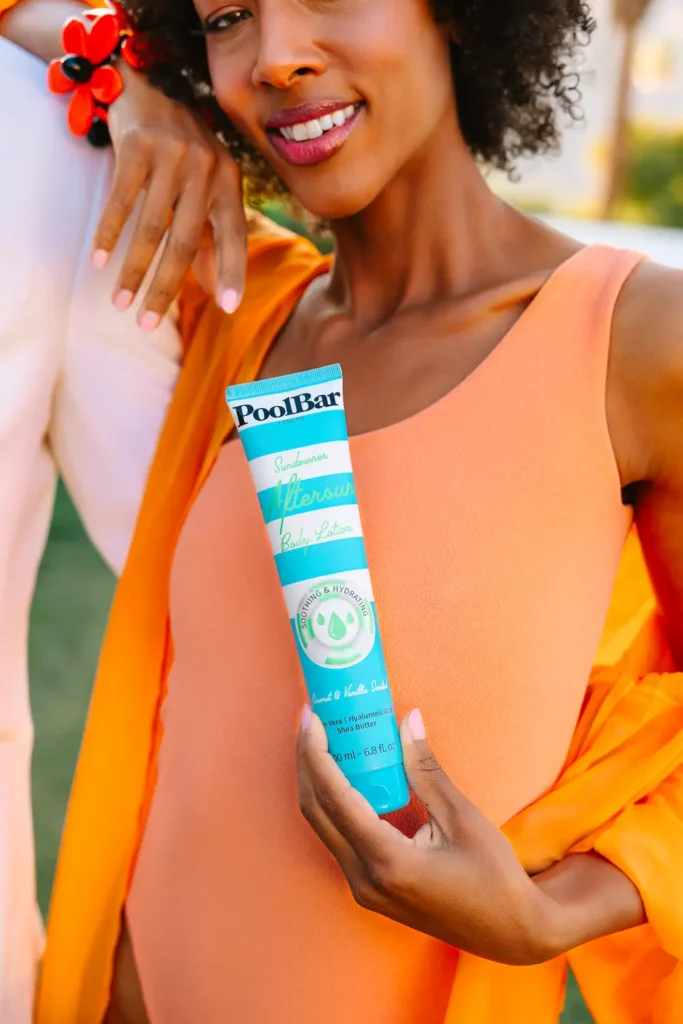
PoolBar’s Sundowner Aftersun Body Lotion combines Aloe Vera, Hyaluronic Acid, and Shea Butter in a lightweight, cooling formula designed to give skin what it needs after a day in the sun.
Dermatologically tested for all skin types including sensitive skin, cruelty-free, with a signature coconut and vanilla scent.
The Best After-Sun Routine Starts Before You Burn
Sunburn is preventable. Applying the right SPF correctly, reapplying consistently, and covering up during peak UV hours removes the need for sunburn recovery entirely.
For a full guide to how often to reapply sunscreen and what resets the clock, and for building sun protection into your daily routine, When To Apply Sunscreen In Your Skincare Routine covers each step.
Frequently Asked Questions
What is the best thing to put on sunburn?
A fragrance-free aftersun lotion containing Aloe Vera and Hyaluronic Acid applied to slightly damp skin is one of the most effective first steps for soothing sunburn. Aloe Vera has well-documented anti-inflammatory properties and Hyaluronic Acid helps compensate for the accelerated moisture loss sunburned skin experiences. Avoid alcohol-based products, heavy oils, and fragrances during the healing process.
How often should you apply aftersun when burnt?
Reapply every two to four hours, or whenever the skin feels hot, tight, or dry again. Sunburned skin loses moisture significantly faster than healthy skin, which means a single application is not enough. Consistent reapplication throughout the day and into the peeling phase makes a meaningful difference to recovery.
How do you stop sunburn peeling?
Peeling cannot be stopped entirely as it is the body’s process of shedding damaged skin cells. What reduces its severity is consistent hydration.
Apply aftersun frequently throughout the healing phase, never pick or scratch at loose skin, avoid exfoliating, wear loose breathable clothing over affected areas, and keep the skin moisturized until the peeling has fully resolved.
Should you moisturize sunburn?
Yes. Keeping sunburned skin hydrated is one of the most important parts of recovery. Use a fragrance-free aftersun lotion rather than a standard body moisturizer.
Aftersun formulas are specifically designed for post-UV skin with higher concentrations of soothing and hydrating ingredients, making them more effective than a regular lotion in this context.
When should sunburn be seen by a doctor?
Seek medical advice if the burn is severe, covers a large area, or shows signs of blistering or infection. Seek medical advice immediately if sunburn is accompanied by fever, chills, nausea, dizziness, or extreme fatigue, as these are symptoms of heat exhaustion or sun poisoning that require medical treatment.
Sun Care Infused With Skincare
PoolBar London sunscreens are formulated and manufactured in the USA, dermatologically tested and reef safe. Broad-spectrum UVA and UVB protection, with antioxidant free radical support from Vitamins C and E.