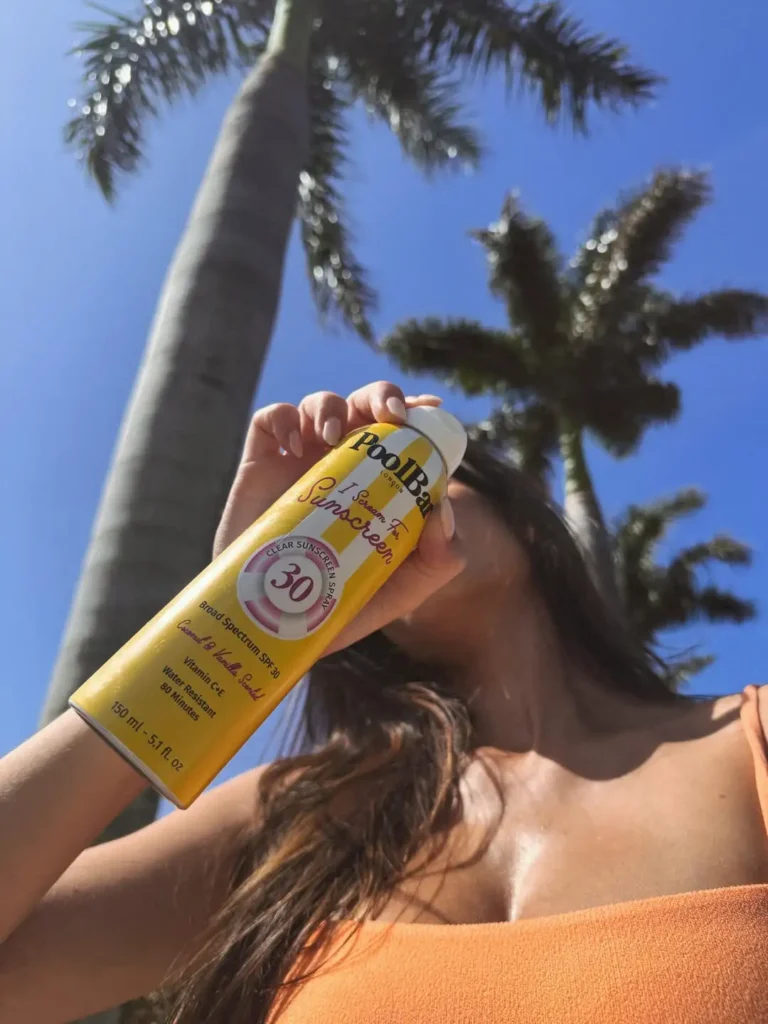
Yes, you can use sunscreen and retinol, and you really should. Retinol goes on in the evening, sunscreen goes on every morning, and together they make a pretty great team.
Here is how to fit both into your routine, what the research says about retinol and sun sensitivity, and why winter is no excuse to skip SPF.
Can You Use Retinol and Sunscreen Together?
Yes, and they are happiest when used a few hours apart. Retinol belongs in your evening routine and sunscreen belongs in your morning one, so in practice you are never layering the two.
If you use a retinol designed for daytime, sunscreen still goes on last, after moisturizer and before makeup, just like any morning skincare routine.
Not sure whether yours is a daytime formula? Check the label, and when in doubt, keep it for the evening.
Why Retinol Goes On at Night
Retinol and sunlight are not best friends. Retinoids are sensitive to light, oxygen, and heat, which is why so many retinol products come in dark or opaque packaging, and why evening is the default.
Some newer formulas are made to hold up better in daylight, but unless the label says so, treat retinol as an evening ingredient.
A 2024 review in the Journal of Cosmetic Dermatology describes retinoids as highly unstable and extremely sensitive to light, oxygen, and temperature, and notes that they can cause skin irritation too, including redness, flaking, dryness, and a burning feeling.
Source: Journal of Cosmetic Dermatology, 2024
Does Retinol Make Your Skin More Sensitive to the Sun?
This is one of the most debated questions in skincare, and the honest answer is that the research is mixed.
Two things often get muddled. Retinoids breaking down in light is real, and it is the reason for nighttime use. Whether retinoids make your skin burn more easily is much less clear.
Dermatology Times notes that clinical testing for sun sensitivity with retinoids is generally reassuring, and that the “sun sensitivity” many people feel is often the irritation, more reactive skin barrier, and flushing that come with starting a retinoid.
It also says retinoids can generally be used year-round with evening application and daily sunscreen.
Source: Dermatology Times, 2026
The picture is not identical for every retinoid, though. The prescribing information for trifarotene, a newer prescription retinoid for acne, lists sunburn among its most common side effects, and advises sunscreen and protective clothing over treated areas when sun exposure cannot be avoided.
Source: Aklief prescribing information, 2023
Research on over-the-counter retinol itself is thinner than for prescription retinoids, so the sensible advice is the same either way: apply it in the evening and wear sunscreen every morning.
If you use retinoids for breakouts, daily SPF also helps stop post-acne marks from darkening.
Why Sunscreen Matters Even More When You Use Retinol
Retinol is working on fine lines, rough texture, and dark marks. The sun is working against exactly the same things.
Retinol takes the night shift and sunscreen takes the day shift, and skipping the day shift gives the sun a free run at everything you are trying to improve.
A 2025 review of how UV drives photoaging across different skin types found that lighter skin tends to show more wrinkles and sagging, while deeper skin tones are more prone to pigmentation changes and uneven texture.
Source: Cureus, 2025
UVA rays, which go deeper into the skin and are linked to aging, are around all year, even on cloudy days.
A Simple Morning and Evening Routine to Follow
*Swipe left to view on mobile
| Morning | Evening |
|---|---|
| 1. Cleanse your face | 1. Cleanse your face thoroughly to remove sunscreen & makeup |
| 2. Moisturize your face | 2. Retinol, as directed on the product |
| 3. Sunscreen SPF 30 or higher, always the final step | 3. Moisturize with a nighttime cream |
| Reapply SPF every 2 hours when outdoors | No sunscreen needed indoors at night |
Give your moisturizer a few minutes to settle before sunscreen goes on, so the two do not pill. Use a generous amount, about 1 teaspoon for the face being the usual guide, and how to apply sunscreen shows what that looks like.
When outdoors, reapply every two hours. As for the retinol itself, follow the instructions on the product (or your prescriber’s, if it is a prescription), and build the tolerance up slowly.
What to Look for in a Sunscreen When You Use Retinol
Good news: you do not need a special “retinol sunscreen”. You need an SPF you will actually wear every single morning.
Broad-spectrum, SPF 30 or higher, as broad-spectrum means it covers both UVA and UVB rays, and SPF 30 is the standard minimum.
A formula you enjoy wearing, since the best sunscreen is the one that feels nice enough to use daily. Texture and finish matter more than they get credit for.
If a mineral option appeals, PoolBar’s Mineral SPF 50 Face Cream uses Zinc Oxide as the active ingredient for broad-spectrum UVA and UVB protection.
Because Zinc Oxide works at the surface of the skin rather than being absorbed, it gets to work the moment it goes on, with no waiting around.
Dermatologically tested for all skin types, reef safe, and formulated and manufactured in the USA.
It also includes Vitamins C and E for antioxidant support, and because retinol is an evening step, the two never end up layered together.
Retinol in Winter: Do You Still Need SPF?
Yes, and it is easy to forget. When the weather turns cold and cloudy, sunscreen drifts out of the routine, but UVA is around all year.
Cold wind and dry air can also leave skin feeling raw all on their own, and the windburn vs sunburn guide explains how wind strips the skin’s protective outer layer.
Add a retinoid and it is worth being extra gentle. If you are heading up a mountain, sun protection on the slopes matters even more, since altitude and snow both push UV higher.
And if your skin is windburned or sunburned, skip the retinol until it has settled.
When to Check In With a Dermatologist
This post is general skincare guidance, not medical advice. If you use a prescription retinoid such as tretinoin, follow your prescriber’s instructions on how and when to use it.
It is worth checking in with a dermatologist if your skin stays irritated, burns, or peels for longer than you would expect, or if you are not sure your retinoid is the right fit.
And if you are pregnant or trying to conceive, ask your doctor before using any retinoid.
If you do end up sunburned, pause the retinol until your skin has calmed down, and the steps in our sunburn recovery guide will help it along.
Frequently Asked Questions
Can I use retinol and sunscreen at the same time?
They are best used at different times of day. Retinol goes on in the evening and sunscreen goes on every morning, so you are never layering the two. If you use a retinol designed for daytime, apply it before your moisturizer and finish with sunscreen as the last step.
Do I need sunscreen if I only use retinol at night?
Yes. Daily sunscreen is recommended for everyone, and it matters even more with retinol, since UV works against the same concerns retinol is treating. UVA rays are present on cloudy days and through windows too.
Can I use retinol in the morning?
You can if your formula is designed for daytime use, but most are not, since light can reduce how well retinol works. If you are not sure, evening is the simple default. Whenever you apply it, sunscreen goes on last in the morning.
Should I stop using retinol in summer or on vacation?
For most people there is no need, as long as retinol goes on in the evening and sunscreen goes on every morning, reapplied every two hours outdoors.
If you are heading somewhere with long days in intense sun, or you get sunburned, it is sensible to pause retinol until your skin settles. Your dermatologist can advise on prescription retinoids.
What SPF should I use with retinol?
A broad-spectrum SPF of 30 or higher is the standard recommendation, and SPF 50 is a good choice for long days outdoors or at altitude.
Whether you choose a mineral or chemical formula comes down to what suits your skin and what you will wear every day, and mineral vs chemical sunscreen explains how they differ.
Sun Care Infused With Skincare
PoolBar London sunscreens are formulated and manufactured in the USA, dermatologically tested and reef safe. Broad-spectrum UVA and UVB protection, with antioxidant free radical support from Vitamins C and E.