Both leave the skin red, sore, uncomfortable, and both tend to strike when you least expect them. Windburn and sunburn are caused by very different factors and require specific responses.
In cold weather environments, they very often happen at the same time. Here is how to tell them apart and what to do about both.
What Is Windburn?
Windburn is what happens when cold, dry wind strips the outer layer of your skin of its moisture and protective oils. The result is skin that feels tight, hot, dry, and irritated, usually on the face first since facial skin is thinner and more exposed than the rest of the body.
It does not take long either. In a controlled study, just 15 minutes of cold, dry air blown onto the skin caused a significant drop in hydration, while skin treated with a moisturizer held onto its moisture.
Source: Dermatology Research and Practice, 2012
One of the most useful things to know about windburn is how quickly it appears. Unlike sunburn, which typically takes two to six hours to become visible, windburn can develop within minutes to an hour of exposure.
Windburn tends to show up quickly and feels dry and tight, while sunburn usually takes a few hours to appear. But wind cools the skin, which can hide the feeling of sunburn while it is happening, so it is easy to have both.
What Is Sunburn?
Sunburn is caused by UV radiation damaging the DNA of skin cells, triggering an inflammatory response that causes redness, heat, and pain.
It has nothing to do with temperature, which is one of the most important and most underestimated facts in winter skin protection. A cool, cloudy, windy day in December can carry the same UV index as a warm summer afternoon.
UVB rays are the primary cause of sunburn, producing the visible redness and burning most people recognize.
UVA rays go deeper into the skin and are responsible for tanning, premature aging, and longer-term cellular damage. Both are present year-round, regardless of how cold or overcast the conditions feel.
Unlike windburn, sunburn takes time to show up. The redness typically develops two to six hours after exposure and peaks around 24 hours, which is why a day on the slopes can feel fine in the moment and painful by evening.
Windburn vs Sunburn: How to Tell the Difference
The two conditions share enough symptoms that they are regularly confused. Here is a quick reference:
*Swipe left to view on mobile
| Windburn | Sunburn | |
|---|---|---|
| Primary cause | Cold dry wind stripping protective lipids | UV radiation damaging skin cell DNA |
| Onset | Within minutes to hours of exposure | Two to six hours after exposure |
| Skin feel | Tight, dry, rough, and irritated | Hot, tender, and painful to touch |
| Temperature related? | Yes, worse in cold conditions | No, UV is present regardless of temperature |
| Long-term risk | Mainly surface irritation that settles within days | Premature aging, pigmentation, skin cancer risk |
| Common scenarios | Skiing, running, cycling, hiking in winter | Sunny days, snow or water reflection, high altitude |
| Treated with | Heavy moisturizer, barrier repair | Aftersun, cooling, hydration |
The most reliable way to tell them apart is timing and texture. Windburn appears quickly and leaves skin feeling dry and rough.
Sunburn takes longer to develop and tends to feel hot and tender to the touch rather than simply tight and dry. In practice, as the next section explains, both are often present at the same time.
Why Windburn and Sunburn So Often Happen Together
The Skin Cancer Foundation describes wind as having a double impact on the skin.
It directly strips and irritates the outer layer, and as that outer layer dries out and starts to shed, it takes the skin’s natural UV-absorbing compounds with it.
The newly exposed skin beneath is significantly more vulnerable to UV damage than intact, healthy skin.
Source: Skin Cancer Foundation, 2023
In practice, that means a windy day can leave you with both at once, because windburn makes sunburn more likely.
On the ski slopes, the higher you go, the thinner the air, and the less UV it filters out. When researchers measured UVB rays at noon on cloudless days, the levels in Vail, Colorado (8,500 feet) were around 60% higher than in New York City, and about the same as in Orlando, Florida.
Snow adds to the picture too. A study of 32 ski areas in western North America recorded UV Index readings as high as 10, with UV also arriving scattered through the sky and reflected off the surroundings.
There are a lot of variables for one ski day, which is why sun protection on the slopes deserves its own conversation.
Sources: NYU School of Medicine study, 1999 and Archives of Dermatology, 2010
How to Treat Windburn
The priority with windburn is rebuilding the moisture and lipid barrier that the wind has stripped.
- A rich, fragrance-free moisturizer applied as soon as you get inside is the most effective first step. Apply it to slightly damp skin to lock in moisture before it evaporates, the same principle behind applying aftersun to damp skin after a day in the sun.
- Skip the hot shower, as hot water strips further moisture from already compromised skin, so cool or lukewarm water is significantly better in the first few hours after wind exposure.
- Avoid anything containing alcohol, artificial fragrance, or active ingredients such as retinoids and acids. These aggravate an already stressed barrier rather than helping it recover, and windburned skin needs gentle handling above everything else.
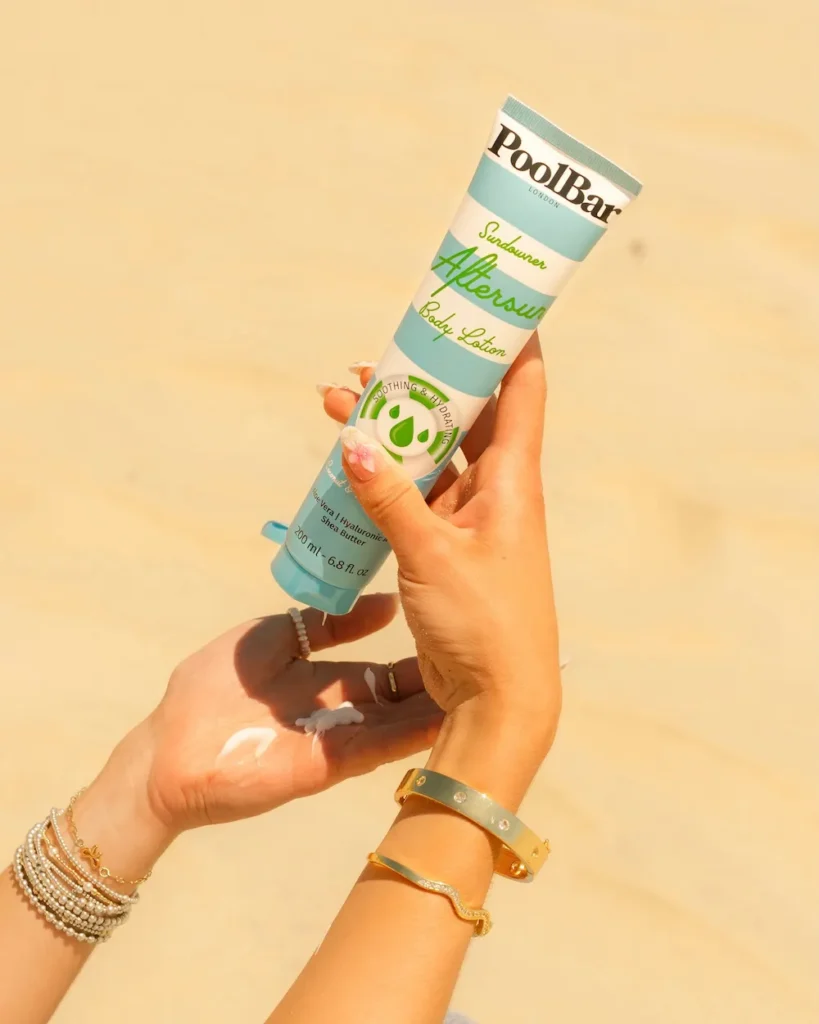
If the skin is also sunburned, treat the sunburn first with a cooling aftersun formula containing Aloe Vera and Hyaluronic Acid before applying a gentle moisturizer on top.
That order gives the sunburned skin the soothing and hydrating response it needs while the moisturizer rebuilds the barrier the wind stripped.
Windburn typically resolves within a few days with consistent moisturizing. If redness, burning, or swelling worsens rather than improves, a dermatologist visit is worth considering.
How to Prevent Both at the Same Time
The good news is that one routine covers both. Most of the steps that protect against windburn also protect against sunburn, so it is not about adding extra steps in winter, just making the existing ones count more.
- Apply a broad-spectrum SPF 30 or higher every morning, including on overcast and cold days. Cloud cover filters only a portion of UV radiation and cold temperatures have no effect on UV index whatsoever. How UV intensity changes throughout the day and across the year is worth a read if you spend time outdoors in winter.
- Reapplication matters just as much in the cold. Wind physically removes sunscreen from the skin as the outer layer sheds, shortening the effective protection window faster than most people expect. The two-hour rule applies in winter exactly as it does in summer, and after any activity involving significant wind exposure, sooner is better.
- Cover exposed skin with scarves, balaclavas, and gloves. This creates a physical barrier against both wind stripping and UV exposure at once, and it is the single most effective prevention measure in genuinely harsh conditions.
- Apply a rich moisturizer or barrier cream to exposed areas before going outside. Building up the skin’s moisture levels before wind exposure begins significantly reduces how much damage the wind can do to the barrier.
At altitude, SPF 50 is a sensible choice. UV climbs with elevation, so a full day on the slopes is a good time to know what the SPF number actually tells you and to reapply on schedule
Protecting Your Skin in Winter
PoolBar’s Mineral SPF 50 Face Cream uses Zinc Oxide as the active ingredient for broad-spectrum UVA and UVB protection.
Because Zinc Oxide works at the surface of the skin rather than being absorbed, it gets to work immediately on application with no waiting period before heading outside, which matters more in winter when conditions and timing are less predictable.
It is also a good fit when wind has left skin feeling a little raw, since mineral formulas are widely recommended for sensitive and acne-prone skin.
If you are choosing between formulas, mineral vs chemical sunscreen breaks down how each one works. Dermatologically tested for all skin types, reef safe, and formulated and manufactured in the USA.
Frequently Asked Questions
What does windburn feel like?
Tight, hot, dry, and irritated, particularly on the face. It tends to appear as a flush of redness that develops quickly during or shortly after wind exposure. The skin feels rough and uncomfortable rather than the deep tenderness that comes with sunburn.
Can you get windburn and sunburn at the same time?
Yes, and in winter outdoor environments this is very common. Wind strips the skin’s outer protective layer, which makes the skin beneath it significantly more vulnerable to UV damage. That is why winter sun protection matters more than most people expect.
Does sunscreen help with windburn?
Sunscreen does not prevent windburn directly since windburn is caused by physical wind stripping rather than UV radiation. What it does is protect against the sunburn that frequently occurs alongside it.
And since wind removes sunscreen from the skin as the outer layer sheds, reapplying regularly in windy conditions is important for keeping UV protection consistent.
How long does windburn last?
Most cases resolve within a few days with consistent moisturizing and barrier repair. Keeping the skin hydrated and avoiding anything that strips further moisture, including hot showers and products containing alcohol or fragrance, helps it settle more quickly.
Is windburn worse than sunburn?
They cause different types of damage so the comparison is not straightforward. Windburn causes immediate surface irritation and barrier disruption, which typically settles within a few days.
Sunburn causes deeper cellular damage and carries long-term risks including premature aging and increased skin cancer risk with repeated exposure.
When both happen together, which is common in winter outdoor conditions, the combined effect is worse than either alone.
Sun Care Infused With Skincare
PoolBar London sunscreens are formulated and manufactured in the USA, dermatologically tested and reef safe. Broad-spectrum UVA and UVB protection, with antioxidant free radical support from Vitamins C and E.